In 2027, we mark the bicentenary of Ludwig van Beethoven’s death, reminding us yet again of his iconic personality. On the one hand, this personality was marked by Enlightenment ideals and the French Revolution, while, on the other, it was forged by the musical world that grew out of the classical conception of Joseph Haydn and Wolfgang Amadeus Mozart and subsequently influenced all of Beethoven’s successors.
After spending his youth in Bonn, Beethoven moved to Vienna, where he supported himself by teaching and performing at private and public concerts, while at the same time perfecting his knowledge of music with Joseph Haydn and Antonio Salieri, among others. During these years, he gradually mastered all of the musical genres of his time and succeeded in forming his own unique artistic expression within their framework. He thus entered his mature compositional period as a respected pianist and composer.
With the financial support of patrons and publishers, his mastery enabled him to explore new expressive possibilities. Beethoven composed freely and unencumbered, creating works full of expressiveness, militancy and grandeur, but also displaying playfulness, lyricism and serenity. His music resonated in homes, private salons and concert halls from England to Russia. It also marked the Slovenian lands, and it is with pride that we recall that Ludwig van Beethoven was an honorary member of Ljubljana’s Philharmonic Society.
In his later years, burdened by hearing loss, financial difficulties and family discord, Beethoven became increasingly withdrawn. During this period, his compositional language was influenced by the defeat of Napoleon, whom he had once greatly admired, and by the strict absolutism of Metternich. Nevertheless, his indissoluble creative spirit allowed him no rest, and it is among his late works that we find some of his greatest masterpieces.
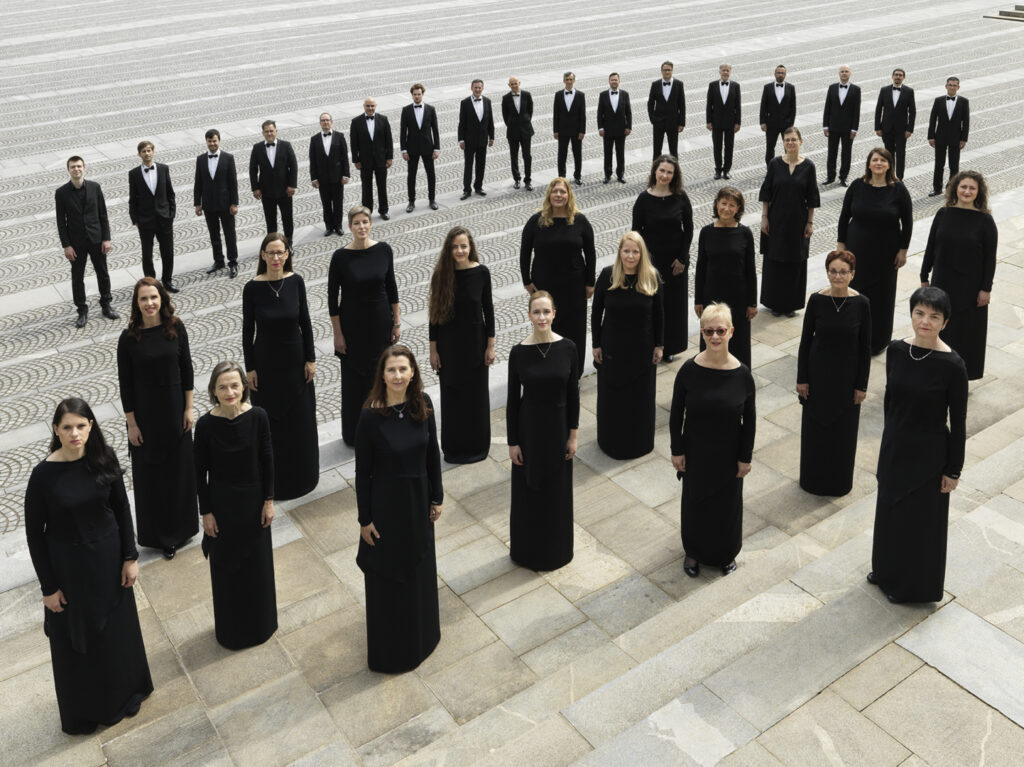
At the end of March 1827, more than ten thousand people are said to have attended Ludwig van Beethoven’s funeral, and his music reached millions of listeners even during his own lifetime. Its richness continues to inspire us two hundred years later, which is why the entire musical world – including the Slovenian Philharmonic Orchestra and Choir – is paying tribute to the works of this musical giant in 2027.


 In 2027, we mark the bicentenary of Ludwig van Beethoven’s death, reminding us yet again of his iconic personality. On the one hand, this personality was marked by Enlightenment ideals and the French Revolution, while, on the other, it was forged by the musical world that grew out of the classical conception of Joseph Haydn and Wolfgang Amadeus Mozart and subsequently influenced all of Beethoven’s successors.